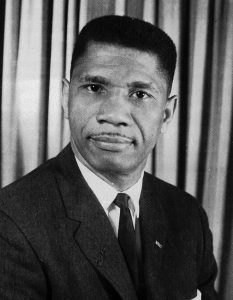
Dr. Jane Cooke Wright
Dr. Jane Cooke Wright pioneered the use of chemotherapy to treat cancer at a time when the field barely existed — and she did it as a Black woman in a medical establishment that doubted both her race and her gender at every turn. Her research on the drug methotrexate led to breakthroughs in treating breast cancer, skin cancer, and leukemia. She developed techniques for testing anticancer drugs on human tissue cultures rather than on patients, transforming cancer treatment from guesswork into science.
Born in New York City in 1919 into a family of physicians — her father, Louis Tompkins Wright, was the first Black surgeon on staff at a New York City hospital — Wright earned her medical degree from New York Medical College in 1945. She joined her father's research at Harlem Hospital and quickly surpassed him, becoming one of the leading cancer researchers in the world.
In 1964, Wright co-founded the American Society of Clinical Oncology, the organization that would come to define modern cancer medicine. She was named associate dean of New York Medical College in 1967 — the highest-ranking Black woman in American medical school administration at the time. Her work saved millions of lives and established the scientific framework that modern oncology is built upon.
You have to keep plugging away. Everyone gets knocked down, but the key is to get back up again.— Dr. Jane Cooke Wright
Key Milestones