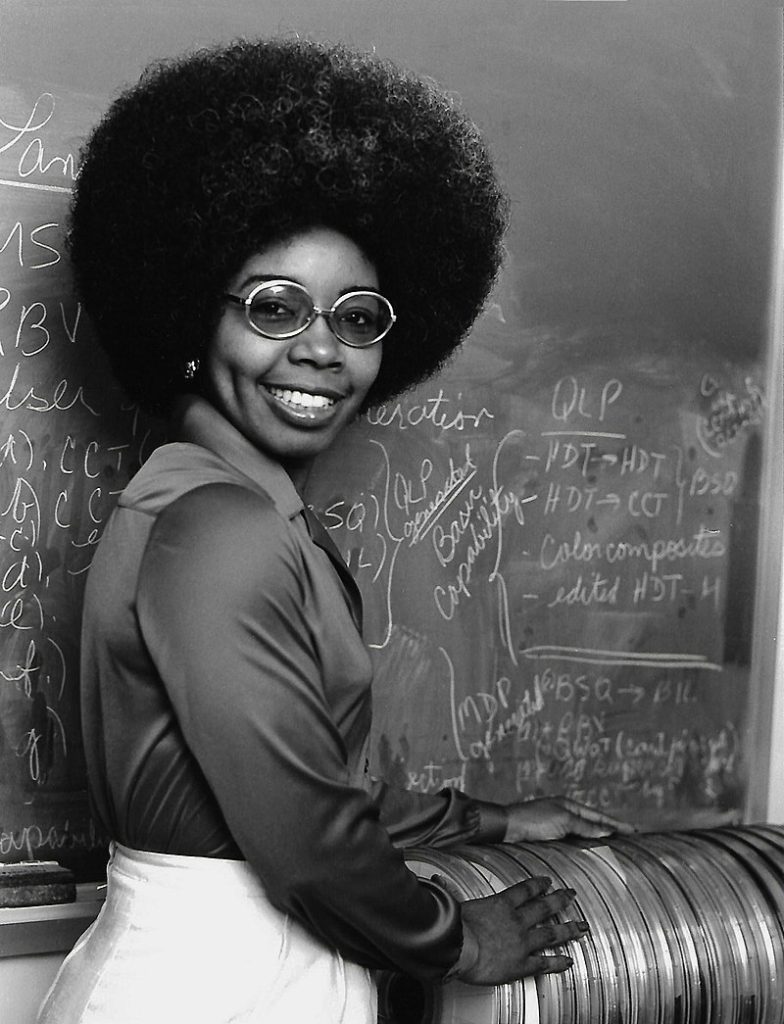
Valerie Thomas
Valerie LaVerne Thomas invented the illusion transmitter in 1980 — a device that uses concave mirrors to create three-dimensional optical illusions of remote objects. The technology, patented by NASA, laid groundwork for advancements in 3D imaging, holographic television, and surgical visualization. Thomas spent over three decades at NASA as a data analyst and project manager, contributing to some of the agency's most important Earth science missions.
Born in Maryland in 1943, Thomas was fascinated by electronics as a child but received no encouragement — her father, himself interested in technology, refused to help her with her projects because she was a girl. She persisted, earning her degree in physics from Morgan State University, one of the few women in her program.
At NASA's Goddard Space Flight Center, Thomas managed the image processing systems for the Landsat satellite program, which produces the satellite imagery used for weather forecasting, agriculture, and environmental monitoring worldwide. She also managed the Large Area Crop Inventory Experiment, which used satellites to predict crop yields globally. Her illusion transmitter patent, granted in 1980, anticipated technologies that are only now becoming commercially viable. She continues to mentor young scientists, particularly women and girls of color interested in STEM.
Attributed: If you can imagine it, the science will follow.— Valerie Thomas
Key Milestones
A Life in Firsts
Keep Exploring