Happy birthday to Arthur Ashe, a champion whose legacy reached far beyond the tennis court.
In 1975, Ashe became the first Black man to win the Wimbledon singles title, defeating Jimmy Connors in one of the sport’s most historic finals. But that milestone was only one part of a life defined by courage, purpose, and service.
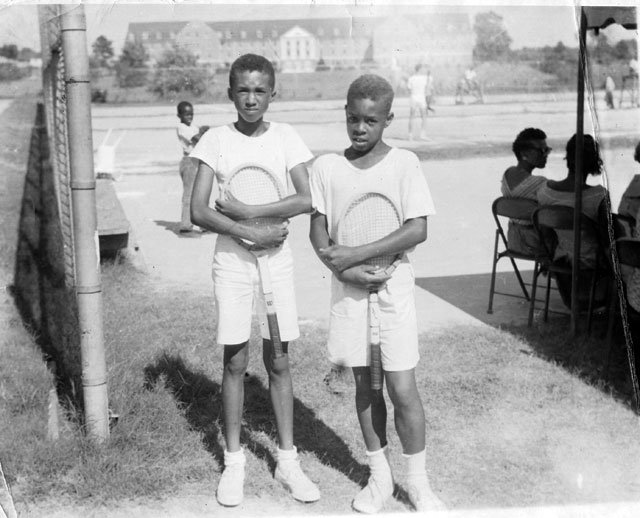
1. He learned the game on public courts.
His father worked at Brook Field, a Black-only public playground that included tennis courts, giving Ashe early access to the sport that would later make him a global name.
2. His historic US Open win came with a catch.
In 1968, Ashe won the US Open, becoming the first Black man to capture the title. Because he was still an amateur at the time, he could not accept the $14,000 prize money. Instead, he received $280 in expenses while runner-up Tom Okker received the winner’s purse.
3. He used tennis to speak out against apartheid.
His impact also stretched far beyond tennis. After South Africa denied him a visa, Ashe spoke out against apartheid and called for the country to be excluded from international tennis. His advocacy made him one of the most visible athletes using sport as a platform for justice.
View this post on Instagram
4. His Grand Slam legacy still stands.
Ashe remains the only Black man to win singles titles at Wimbledon, the US Open, and the Australian Open, a record that still speaks to his place in tennis history.
5. He turned his diagnosis into advocacy.
In his final years, Ashe publicly shared that he was living with HIV, which he believed he contracted through a blood transfusion during heart surgery. He went on to use his voice to raise awareness around HIV and AIDS before passing away on February 6, 1993, from AIDS-related pneumonia.
View this post on Instagram
From speaking out against apartheid to advocatingfor civil rights, health equity, and AIDS awareness, Ashe showed what it meant to make history and then keep showing up for others.
He’s a champion in every sense of the word.