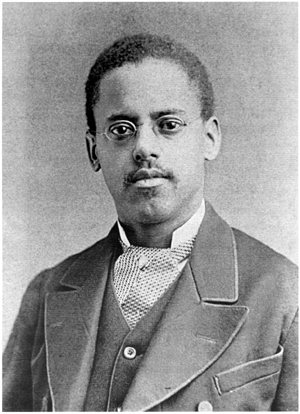
Lewis Howard Latimer
Lewis Howard Latimer was the Renaissance man of the electrical age — an inventor, engineer, draftsman, poet, and painter who worked alongside the two greatest inventors of the nineteenth century: Alexander Graham Bell and Thomas Edison. Latimer drafted the patent drawings for Bell's telephone in 1876 and later developed the carbon filament that made Edison's incandescent light bulb practical for widespread use.
Born in Chelsea, Massachusetts, in 1848, Latimer was the son of George Latimer, a formerly enslaved man whose escape and trial became a cause célèbre in the abolitionist movement. Lewis served in the Union Navy during the Civil War and afterward taught himself mechanical drawing while working as an office boy at a patent law firm. His talent was so evident that he was promoted from office boy to head draftsman.
Latimer's carbon filament, patented in 1882, was the breakthrough that made electric lighting affordable and durable. Without it, Edison's bulb — which used a platinum filament that burned out quickly — would have remained a laboratory curiosity. Latimer joined Edison's company and became the only Black member of the "Edison Pioneers," the elite group of scientists who worked directly with Edison. He also wrote the first textbook on electric lighting.
We create our future by well improving present opportunities: however few and small they be.— Lewis Howard Latimer
Key Milestones
A Life in Firsts


Keep Exploring