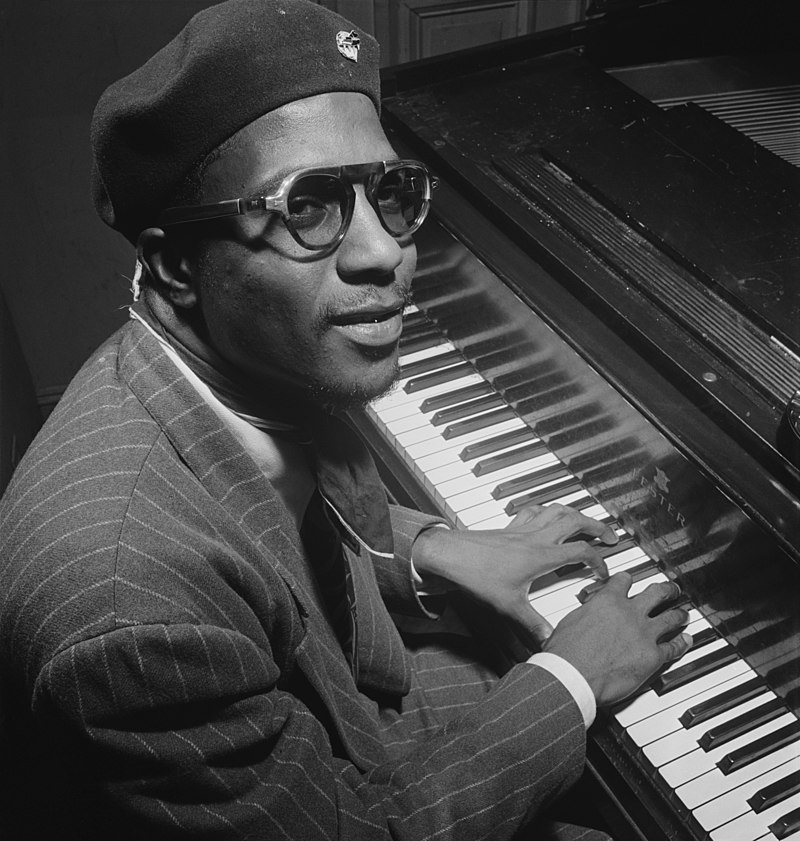
Thelonious Monk
Thelonious Sphere Monk played the piano like no one before or since — angular, dissonant, percussive, and profoundly beautiful. Along with Charlie Parker and Dizzy Gillespie, he was one of the architects of bebop, but his compositions went further, creating a harmonic language so distinctive that his songs — "'Round Midnight," "Straight, No Chaser," "Blue Monk" — are instantly recognizable from the first bar. He is the second most recorded jazz composer in history, behind only Duke Ellington.
Born in Rocky Mount, North Carolina, in 1917, Monk moved to New York as a child and grew up in the San Juan Hill neighborhood of Manhattan. He was largely self-taught and developed his style playing organ in a church traveling evangelistic group as a teenager. In the 1940s, he was a house pianist at Minton's Playhouse in Harlem, where the after-hours jam sessions that birthed bebop took place.
Monk's genius was not always recognized in his time. His unconventional style baffled some critics and audiences, and he was blacklisted from New York clubs for years after a drug arrest (he had refused to testify against a friend). But musicians understood. John Coltrane called his time in Monk's band the most educational experience of his life. In 1964, Monk became only the third jazz musician to appear on the cover of Time magazine.
The piano ain't got no wrong notes.— Thelonious Monk
Key Milestones
A Life in Firsts
Keep Exploring